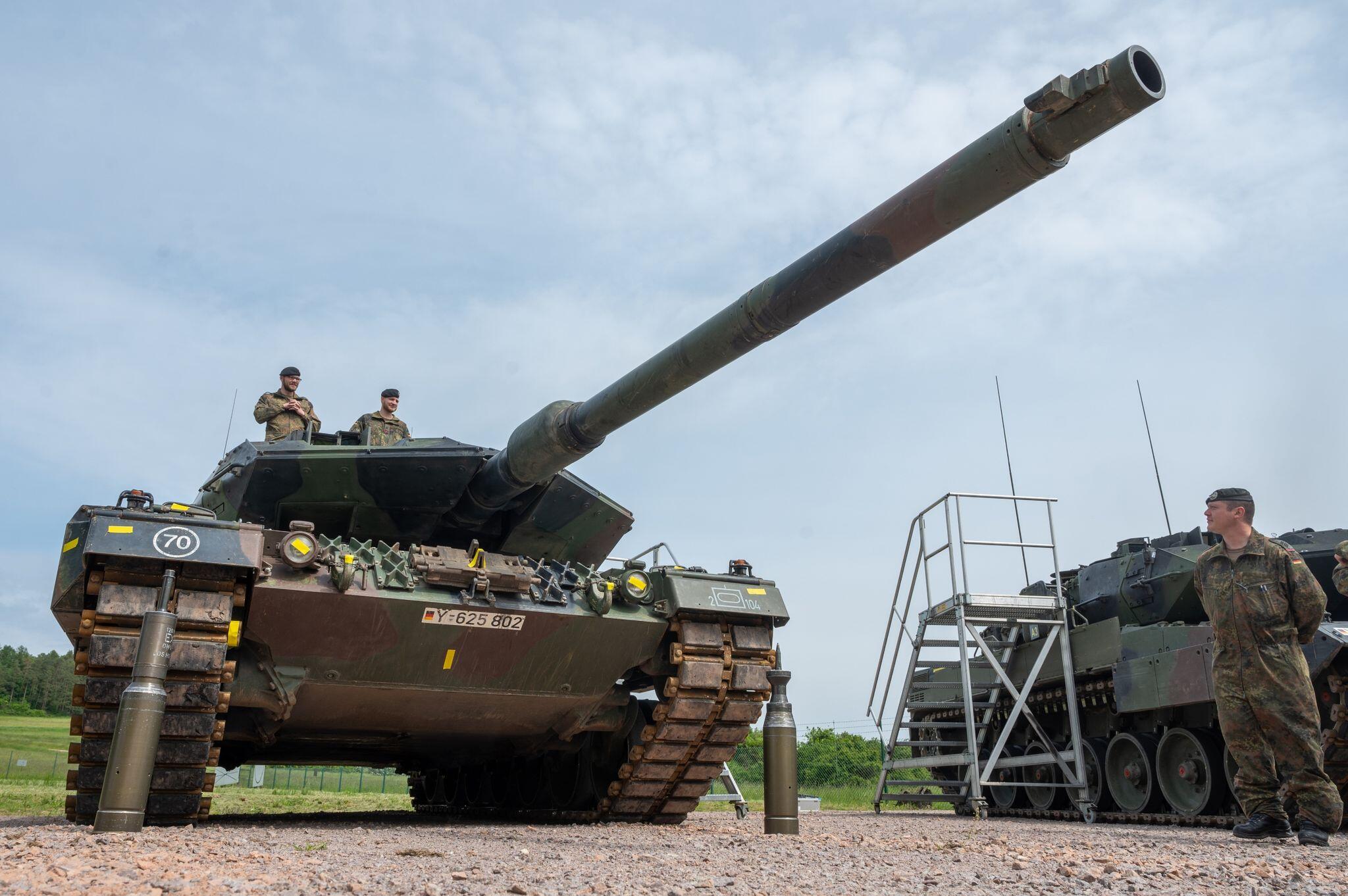

The Panzer Leopard II is a independent engagement tank developed by Krauss Maffei in the 1970s for the German Army. It has since become one of the most modern and respected tanks in the worldwide, known for its superior firepower, mobility, and protection. The Leopard II's evolution was a response to the evolving threats of the Cold War era, and it has undergone several upgrades and modifications to support pace with modern military requirements.
The Evolution of the Panzer Leopard II
The Leopard II's journeying began in the betimes 1970s when the German Army sought a renewal for the Leopard I. The new tankful required to address the shortcomings of its harbinger and offer enhanced capabilities. The developing process involved intensive testing and shade, culminating in the introduction of the Leopard II in 1979.
The initial version, known as the Leopard 2A0, featured a 105 mm L7A3 rifled gun, advanced armor shelter, and a potent engine. Over the years, the Leopard II has seen legion iterations, each delivery improvements in firepower, armor, and technology. The Leopard 2A4, introduced in 1985, featured a 120 mm rifled gun, which importantly enhanced its firepower. Subsequent models, such as the Leopard 2A5 and 2A6, corporate farther advancements in armor and electronics.
Key Features of the Panzer Leopard II
The Leopard II is renowned for its exceptional design and execution. Some of its key features include:
- Firepower: The Leopard II is equipped with a 120 mm rifled gun, able of lighting a variety of ammunition types, including armor sharp fin stabilized discarding clog (APFSDS) rounds and richly explosive anti tank (HEAT) rounds. This makes it highly efficacious against both armored and soft targets.
- Mobility: The tank's potent engine and advanced suspension scheme supply excellent mobility, allowing it to traverse various terrains with ease. The Leopard II can reach speeds of up to 72 km h on roadstead and has a chain of over 550 km.
- Protection: The Leopard II's armor is intentional to withstand a astray reach of threats, including anti cooler missiles and high explosive rounds. The tank's composite armor and reactive armor packages offer comp protection against new battlefield threats.
- Technology: The Leopard II is equipt with sophisticated electronics and sensors, including a caloric imaging scheme, laser rangefinder, and a fire command scheme. These technologies enhance the tank's truth and situational awareness, making it a formidable opponent on the battlefield.
Variants of the Panzer Leopard II
The Leopard II has seen respective variants, each bespoken to particular military needs. Some of the celebrated variants include:
- Leopard 2A4: Introduced in 1985, this strain features a 120 mm rifled gun and improved armor shelter.
- Leopard 2A5: This variant includes enhanced armor and a new air control scheme, improving its overall capabilities.
- Leopard 2A6: Known as the Leopard 2A6M, this variant features a modular armor software and advanced electronics, devising it one of the most advanced versions of the Leopard II.
- Leopard 2A7: The modish variate, introduced in 2014, includes a new turret design, enhanced armor, and improved firepower. It is considered one of the most ripe independent engagement tanks in the world.
Here is a table summarizing the key features of some of the Leopard II variants:
| Variant | Year Introduced | Main Gun | Armor | Engine |
|---|---|---|---|---|
| Leopard 2A4 | 1985 | 120 mm smoothbore | Improved composite armor | MTU MB 873 Ka 501 |
| Leopard 2A5 | 1990 | 120 mm smoothbore | Enhanced composite armor | MTU MB 873 Ka 501 |
| Leopard 2A6 | 1995 | 120 mm rifled | Modular armor package | MTU MB 873 Ka 501 |
| Leopard 2A7 | 2014 | 120 mm smoothbore | Advanced composite armor | MTU MB 883 Ka 501 |
Note: The mesa supra provides a general overview of the key features of some Leopard II variants. Specific details may vary based on the accurate shape and upgrades applied to individual tanks.
Operational History of the Panzer Leopard II
The Leopard II has seen extensive service in assorted conflicts and peacekeeping missions. Its operating account includes:
- Gulf War (1991): The Leopard II played a important role in the Gulf War, where it demonstrated its victor firepower and mobility. German Leopard II tanks were part of the alignment forces that liberated Kuwait from Iraqi occupation.
- Bosnian War (1992 1995): During the Bosnian War, Leopard II tanks were deployed as part of the United Nations Protection Force (UNPROFOR). They provided essential livelihood in maintaining repose and constancy in the region.
- Afghanistan (2001 2021): The Leopard II was used in Afghanistan by versatile NATO countries, including Germany and the Netherlands. The tank's versatility and dependability made it a valuable asset in the ambitious terrain and fight conditions of the region.
- Ukraine Conflict (2022 Present): In response to the ongoing struggle in Ukraine, several countries have pledged to supply Leopard II tanks to Ukrainian forces. This determination underscores the tank's repute as a honest and good weapon scheme in modern warfare.
Future of the Panzer Leopard II
The Leopard II continues to develop, with ongoing upgrades and modernization efforts. The modish variant, the Leopard 2A7, incorporates advanced technologies and enhancements that control its relevance in hereafter conflicts. The tank's modular plan allows for tardily integration of new systems and components, qualification it adaptable to changing military requirements.
As the geopolitical landscape continues to shift, the Leopard II remains a foundation of many nations' defense strategies. Its proved capabilities and ongoing developing ensure that it will remain a formidable presence on the battlefield for years to semen.
One of the key factors conducive to the Leopard II's unfailing succeeder is its adaptability. The tank's modular design allows for the consolidation of new technologies and systems, ensuring that it can dungeon pace with evolving threats. This adaptability is crucial in an era where military engineering is forward rapidly, and the power to raise and modernize existing equipment is indispensable for maintaining a militant edge.
besides its technical capabilities, the Leopard II's reputation for reliability and effectivity has made it a sought subsequently asset for many nations. Its proved path record in various conflicts and peacekeeping missions has solidified its status as one of the world's chancellor main struggle tanks. As new threats emerge and military doctrines evolve, the Leopard II's versatility and adaptability will proceed to make it a valuable plus for modern armies.
Moreover, the Leopard II's role in international defense cooperation cannot be overdone. The tank's widespread adoption by NATO and other confederate nations has fostered a warm mesh of interoperability and shared expertise. This coaction enhances the overall effectiveness of confederate forces and ensures that the Leopard II stiff a key portion of corporate defense strategies.
to sum, the Panzer Leopard II stands as a testament to German technology excellency and military initiation. From its origination in the 1970s to its ongoing modernization efforts, the Leopard II has systematically demonstrated its superiority in firepower, mobility, and auspices. Its operational history and hereafter prospects underscore its enduring relevance in the nonstop changing landscape of new warfare. As nations continue to vest in and raise their Leopard II fleets, the tank s bequest as a symbol of military prowess and technical advancement will endure.
Related Terms:
- leopard 2 main struggle tankful
- worldwide of tanks leopard 2
- leopard 2 cooler inside
- modern german tanks leopard 2
- leopard 2a4 principal battle tank
- leopard tankful maker