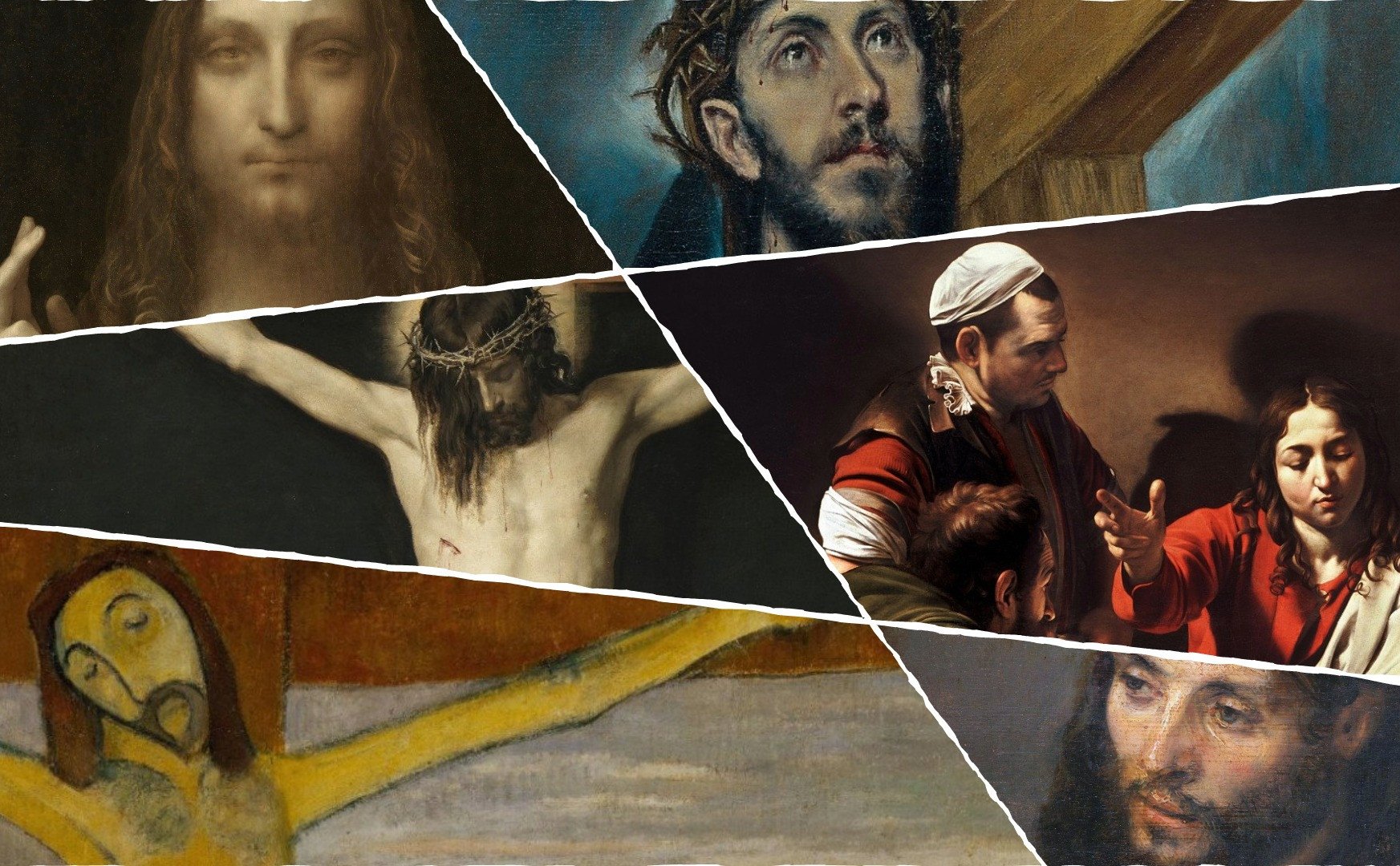

The account of art is inextricably coupled to the digit of Christ, a dependent that has divine countless masterpieces crossways centuries, cultures, and aesthetic movements. Exploring famous paintings of Jesus is not merely an exercise in religious study; it is a journeying through the evolution of human creativity, position, and aroused aspect. From the hidden frescoes of the Roman catacombs to the high definition realism of the new era, these depictions service as a mirror to the theological and social values of their time. Each brushstroke tells a account of faith, struggle, and the unfailing quest to figure the godlike inside the man form.
The Evolution of Christ in Art

The way artists have portrayed Jesus has shifted dramatically over two millennia. In the soonest days of Christianity, Jesus was much depicted symbolically as the Good Shepherd or through icons like the fish. It wasn t until the legalization of Christianity in the Roman Empire that more exchangeable physical traits, such as the beard and long hairsbreadth, began to emerge.
During the Middle Ages, the stress was on theology and agency, often resulting in compressed, two dimensional icons intended for worship preferably than realism. However, the Renaissance brought a revolutionary modification. Artists began to use chiaroscuro (the line of light and morose) and anatomical precision to render Jesus a tangible, man bearing. This era produced some of the most famous paintings of Jesus that remain cultural touchstones today.
- Early Christian Art: Symbolic and lowly, focusing on the "Good Shepherd" motif.
- Byzantine Icons: Formal, fixed, and halcyon, emphasizing the "Pantocrator" or Ruler of All.
- Renaissance: Human centric, emphasizing physical suffering and emotional depth.
- Baroque: Highly spectacular, exploitation intense light to highlighting the miraculous and the godlike.
The Last Supper by Leonardo da Vinci

Arguably the most accepted work in the account of spiritual art, The Last Supper (1495 1498) by Leonardo da Vinci captures the precise here Jesus announces that one of his disciples will betray him. Located in the Convent of Santa Maria delle Grazie in Milan, this masterpiece is celebrated for its composite use of perspective and the psychological depth of the apostles reactions.
Da Vinci broke tradition by placing all the figures on one english of the mesa, creating a cinematic placement that draws the spectator s eye straight to Jesus, who forms a static triangle at the center of the bedlam. Despite the painting s deterioration over meter due to Leonardo s observational techniques, it stiff the classical entry in any list of celebrated paintings of Jesus.
Note: This is a mural, not a traditional fresco; Leonardo used tempera and oil on a dry bulwark, which contributed to its thin state today.
The Transfiguration by Raphael

Raphael s The Transfiguration is often cited as his last masterpiece. This oeuvre is unique because it combines two distinguishable scriptural narratives: the Transfiguration of Christ on Mount Tabor and the nonstarter of the Apostles to cure a amok boy in the valley downstairs.
The line betwixt the glow, airy shape of Jesus at the top and the dour, frantic picture at the underside creates a powerful visual metaphor for the connection between the divine and the earthly conflict. Raphael s use of light makes Jesus appear weightless, standing as a pharos of hope against the shadows of man miserable.
Christ Crucified by Diego Velázquez
In the 17th hundred, Spanish artist Diego Velázquez took a minimalist approach to one of the most common themes in Christian art: the excruciation. Painted round 1632, Christ Crucified is notable for its starkness. Unlike other Baroque artists who filled their canvases with weeping crowds and spectacular landscapes, Velázquez set Jesus against a void of virginal fatal.
This isolation forces the viewer to present the forcible reality of the event. The anatomy is rendered with unbelievable precision, and the way the tomentum waterfall over half of Jesus s side adds a layer of mystery and solemnity. It is sorely considered a pinnacle of Spanish Baroque art and a profound meditation on forfeiture.
Summary of Iconic Works and Artists
To assistant categorize these substantive pieces, the table below highlights the key details of some of the world s most famous paintings of Jesus.
| Painting Title | Artist | Period Style | Current Location |
|---|---|---|---|
| The Last Supper | Leonardo da Vinci | High Renaissance | Santa Maria delle Grazie, Milan |
| The Transfiguration | Raphael | High Renaissance | Vatican Museums |
| Christ Crucified | Diego Velázquez | Baroque | Museo del Prado, Madrid |
| The Storm on the Sea of Galilee | Rembrandt | Dutch Golden Age | Stolen (once Isabella Stewart Gardner Museum) |
| Christ of Saint John of the Cross | Salvador Dalí | Surrealism | Kelvingrove Art Gallery, Glasgow |
| Salvator Mundi | Leonardo da Vinci (attributed) | Renaissance | Private Collection |
Salvator Mundi: The Savior of the World

The Salvator Mundi is perhaps the most controversial and discussed painting of late decades. Attributed to Leonardo da Vinci, it depicts Jesus in Renaissance dress, holding a quartz orb in his odd hand while qualification the sign of the cross with his justly. The orb represents the celestial empyrean of the empyrean, signifying his role as the Savior of the World.
In 2017, it became the most expensive painting nonstop sold at auction, fetching over 450 million. Beyond the price tag, the painting is admired for the sfumato technique the loosely, smoky blurring of edges that gives the grimace of Jesus an otherworldly, about persistent timber.
Rembrandt and the Human Christ
Rembrandt van Rijn brought a unique position to famous paintings of Jesus during the Dutch Golden Age. Unlike the idealised, junoesque figures of the Italian Renaissance, Rembrandt s Christ was frequently modeled after real people he knew in the Jewish fourth of Amsterdam.
His study The Storm on the Sea of Galilee (1633) is his sole painted seascape. It depicts Jesus remaining unagitated and unhesitating while his disciples panic as a violent rage threatens to capsize their sauceboat. This picture emphasizes the manhood of the disciples their care, their frenzied confinement contrasted with the divine agency of Jesus over nature.
Note: "The Storm on the Sea of Galilee" was infamously stolen in 1990 during the Isabella Stewart Gardner Museum heist and remains missing to this day.
Modern Interpretations: Salvador Dalí
Moving into the 20th hundred, the depiction of Jesus took a act toward the phantasmagoric and the abstract. Salvador Dalí s Christ of Saint John of the Cross (1951) is a startling leaving from custom. The painting shows Jesus on the transversal from a bird s eye view, sounding down from supra.
Dalí claimed the inspiration came from a cosmic dream and a drawing by the 16th century mystical John of the Cross. There are no nails, no blood, and no cap of thorns. Instead, it is a clean, majestic portrayal that focuses on the metaphysical preferably than the forcible annoyance. It remains one of the most democratic spiritual images in modern history, proving that celebrated paintings of Jesus continue to evolve with our changing understanding of the universe.
The Significance of Light and Color
In many famous paintings of Jesus, lite is used as a tale shaft preferably than just a visual one. In Caravaggio s The Calling of St. Matthew, a single beam of light follows Jesus s deal as he points toward Matthew, symbolizing elysian grace piercing through the everyday world.
Color also plays a vital part:
- Blue: Often confirmed for the robes of Jesus or Mary to represent theology, the sky, and purity.
- Red: Symbolizes humanity, blood, and the sacrifice made on the cross.
- Gold: Frequently found in Byzantine and Gothic art to play the light of heaven and the endless land.
- White: Used during scenes like the Transfiguration or Resurrection to mean holiness and shift.
Why These Paintings Matter Today
The unfailing popularity of famous paintings of Jesus lies in their power to talk to universal human experiences miserable, promise, treachery, and repurchase. You do not need to be a wight of religion to revalue the technological subordination of Michelangelo or the aroused gravitation of Caravaggio.
These artworks service as historical documents that display how dissimilar cultures visualized the perfect man or the suffering handmaiden. They have influenced everything from modern cinema to graphic pattern, cementing their piazza in the collective visual lexicon of the worldwide. Whether it is the quiet dignity of a Rembrandt or the eminent play of a Rubens, these images cover to challenge and inspire viewers crossways the ball.
In drumhead, the tradition of depicting Jesus in art is a will to the power of visual storytelling. From the early symbols of the catacombs to the richly bet auctions of the new day, these deeds capture the crossing of the human and the divine. By studying these masterpieces, we profit insight into the artists themselves, the societies they lived in, and the dateless themes that continue to define the human condition. Whether viewed through a lens of faith or art history, these paintings stay some of the most significant achievements in human culture.
Related Terms:
- celebrated paintings of jesus metamorphosis
- famous portraits of jesus
- popular paintings of jesus
- celebrated rebirth paintings of jesus
- artistic images of jesus
- most naturalistic picture of jesus