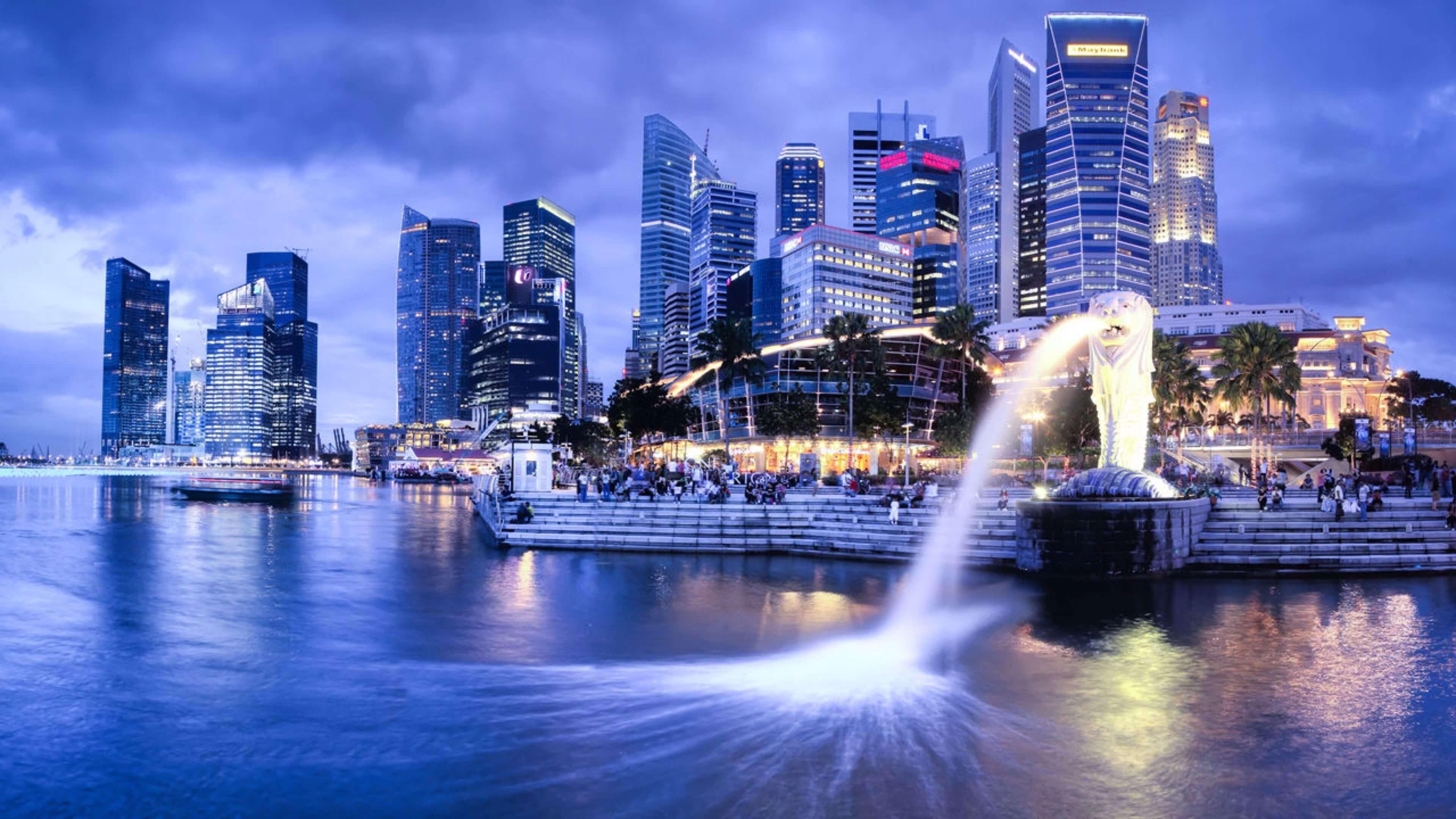

Understanding the singular political and geographic construction of Southeast Asia begins with a looking at the Capital Of Singapore Country. Unlike most nations that are shared into distinguishable provinces, cities, and a centralised basal, Singapore stands as a rare and fascinating example of a city state. This means that the integral country is, in essence, its own basal. When travelers and scholars ask about the specific fix of the government seat, they are sounding at a landmass that serves as a globose financial hub, a garden metropolis, and a supreme island state all at erst. This dual identity defines every expression of lifetime on the island, from its rapid urban development to its extremely efficient governance model.
The Identity of the Capital Of Singapore Country

To reach the conception of the Capital Of Singapore Country, one must foremost infer the definition of a metropolis province. Historically, cities similar Athens or Sparta operated as independent entities. In the new world, Singapore is one of the few living examples, alongside Monaco and Vatican City. Because the land is an island measure only about 728 square kilometers, there is no separation betwixt "commonwealth tied" government and "city tied" management.
The integral island functions as a undivided administrative unit. While you might retrieve references to the Central Business District (CBD) or the Civic District, these are usable zones rather than a separate great metropolis. The Capital Of Singapore Country is essentially the entirety of the main island and its surrounding 63 smaller islands. This centralization allows for implausibly speedy determination making and infrastructure implementation, which has contributed to Singapore's rise from a developing larboard to a first world saving in just a few decades.
Key features of this alone structure include:
- Unified Governance: There are no provincial or province governments; everything is managed by the central Parliament.
- Land Use Efficiency: Every squarely time of the capital is meticulously arranged for residential, commercial, or green quad use.
- Sovereign Status: Despite its small size, it maintains its own military, currency, and foreign policy.
Historical Evolution of the Island City

The history of the Capital Of Singapore Country is rooted in its strategic placement at the tip of the Malay Peninsula. Originally known as Temasek, it was a roaring trading stake before dropping into obscurity. In 1819, Sir Stamford Raffles arrived and recognized the potential of the island as a deeply urine port for the British East India Company.
During the compound era, the "basal" functions were saturated about the Singapore River. This country, now known as the Civic District, remains the middle of the country's historical and political indistinguishability. Following a brief fusion with Malaysia, Singapore became an autonomous republic in 1965. Since then, the transformation has been nothing short of marvelous. The politics moved away from colonial era reliance on swap lone, diversifying into fabrication, high tech diligence, and global finance.
The development of the metropolis commonwealth can be categorized into several eras:
- The Colonial Era (1819 1942): Establishment of the larboard and the layout of the "Town Area".
- The Post War Struggle (1945 1963): Reconstruction and the movement toward ego administration.
- Independence and Industrialization (1965 1980s): Rapid building of HDB flats and industrial estates like Jurong.
- Global Financial Hub (1990s Present): The rise of the Marina Bay horizon and smart metropolis integrating.
Note: While Singapore is a metropolis state, it is shared into five Community Development Council (CDC) districts for local administration, though these are not sovereign cities.
Geographic Layout and Districts

Even though the Capital Of Singapore Country is a single entity, it is organized into various regions to superintend urban density. The Urban Redevelopment Authority (URA) divides the island into five primary regions: North, South (Central), East, West, and North East. Each region serves a specific intention in the lordly designing of the metropolis land.
The Central Area is what most visitors would take the "metropolis center". It includes the Downtown Core, Orchard Road, and the Marina Bay area. This is the pulse of the nation, where most international banks and regime buildings are set. However, residential life is outspread across "New Towns" same Tampines, Jurong, and Woodlands, ensuring that the capital remains livable for its 5. 9 million residents.
| Region | Key Characteristics | Notable Landmarks |
|---|---|---|
| Central | Economic and political bosom | Marina Bay, Parliament House |
| East | Residential and Aviation hub | Changi Airport, East Coast Park |
| West | Industrial and Education hub | Jurong Island, NUS |
| North | Greenery and border gateway | Singapore Zoo, Causeway |
| North East | High concentration residential | Punggol Waterway, Serangoon |
Political Significance of the Capital

The political weight of the Capital Of Singapore Country is hard in the Civic District. This is where the Parliament House of Singapore stands. Unlike countries with sprawling great territories, the proximity of the authorities to the people in Singapore is intimate. Public policies are tested and implemented crossways the island simultaneously, qualification the state a surviving laboratory for urban provision and societal engineering.
The Istana, located cheeseparing Orchard Road, is the prescribed residence and office of the President of Singapore. It is a sprawling estate that serves as a monitor of the country's British colonial past while housing the highest office in the land. Surrounding these political landmarks are the headquarters of the various ministries, such as the Ministry of Finance and the Ministry of National Development, all inside walking space of one another. This compact nature is a elemental driver of the efficiency that Singapore is celebrated for internationally.
Essential aspects of Singapore's political landscape include:
- Parliamentary Republic: A scheme where the Prime Minister is the head of administration.
- Meritocracy: A core principle that governs the civil service inside the great.
- Multi racism: Policy frameworks designed to secure concordance betwixt Chinese, Malay, Indian, and other ethnic groups.
Economic Powerhouse of Southeast Asia

The Capital Of Singapore Country is synonymous with riches and stability in the Asian market. As a spherical fiscal center, it rivals London, New York, and Hong Kong. The Downtown Core is brimming with skyscrapers caparison the worldwide s preeminent banks, insurance companies, and tech giants. But the economy isn't just about finance; it s also about the Port of Singapore, which is one of the busiest transshipment hubs in the worldwide.
What makes the capital's economy singular is the Government coupled Companies (GLCs) and the role of Temasek Holdings and GIC. These sovereign wealth finances invest Singapore's reserves internationally, ensuring the long condition financial security of the metropolis state. Furthermore, the thrust toward becoming a "Smart Nation" has turned the total capital into a playground for tech conception, from independent shuttles to cashless payment ecosystems.
Key economic pillars include:
- Financial Services: Wealth management and fintech innovations.
- Manufacturing: Specifically electronics, chemicals, and biomedical sciences.
- Tourism: Iconic attractions comparable Marina Bay Sands and Sentosa Island.
- Logistics: Utilizing its position as a "Gateway to Asia".
The "Garden City" Vision

A shaping characteristic of the Capital Of Singapore Country is the debate integration of nature into the urban framework. Initiated by the founding beginner Lee Kuan Yew, the "Garden City" imagination aimed to make lifetime punter for residents and more attractive for investors. Today, this has evolved into the "City in Nature" doctrine.
The Gardens by the Bay, with its iconic Supertrees and Cloud Forest, is the new symbol of this commitment. However, it goes deeper than just tourist floater. Every road is seamed with trees, and perpendicular gardens crawl up the sides of skyscrapers. This gullible base helps fight the urban heat island effect and provides a richly quality of biography in one of the world's most densely populated areas.
Significant green spaces include:
- Singapore Botanic Gardens: A UNESCO World Heritage situation.
- Bukit Timah Nature Reserve: One of the few primary rainforests remaining in a metropolis.
- The Green Corridor: A repurposed railway cartroad that serves as a discontinuous nature track.
- The Southern Ridges: A 10km stretch of greenish spaces connecting respective parks.
Note: Despite being a concrete jungle, about 50 of Singapore is covered in verdure, making it one of the greenest cities in the world.
Infrastructure and Connectivity

The Capital Of Singapore Country is possibly best known for its world class base. Connectivity is the lifeblood of the metropolis state. Changi Airport is systematically ranked as the better airport in the world, service as a critical link between the East and the West. Within the island, the Mass Rapid Transit (MRT) scheme provides a cleanse, efficient, and affordable way to traveling across the basal in below an hour.
The government also manages car ownership through the Certificate of Entitlement (COE) system, which limits the number of vehicles on the route to prevent congestion. This makes the capital unmistakably loose of the gridlock base in other Southeast Asian capitals same Bangkok or Jakarta. Instead, the focus is on "Walk Cycle Ride" initiatives, encouraging residents to use populace rapture and personal mobility devices.
Highlights of Singaporean substructure:
- MRT Network: Multiple lines (North South, East West, North East, Circle, Downtown, Thomson East Coast) covering the whole island.
- Deep Tunnel Sewerage System: A high tech solution for water management and recycling (NEWater).
- Fiber Optic Coverage: Nationwide richly speed net access as part of the Smart Nation first.
Culture and Lifestyle in the City State

Life in the Capital Of Singapore Country is a liquescent pot of cultures. The universe is primarily composed of Chinese, Malays, and Indians, along with a significant expatriate community. This diversity is most visible in the country's food culture. Hawker Centers are the soul of the land, where you can regain Michelin asterisked street nutrient at improbably low prices.
The lifestyle is fast paced but extremely organized. Safety is a minor tie for residents and visitors alike, as the capital consistently ranks as one of the safest cities globally. Whether you are exploring the colourful streets of Little India, the inheritance shophouses of Chinatown, or the trendy cafes in Tiong Bahru, thither is a signified of rescript and cleanliness that is unequalled to this island nation.
Cultural pillars of Singapore:
- Language: English is the main language of command and clientele, but most are bilingualist (Mandarin, Malay, or Tamil).
- Festivals: Chinese New Year, Hari Raya Puasa, Deepavali, and Christmas are all notable as internal holidays.
- Housing: Over 80 of residents live in richly timber regime built HDB flats, fosterage community integrating.
Planning Your Visit to the Capital
If you are planning to sojourn the Capital Of Singapore Country, timing is everything. While the weather is tropic and humid year round, certain months offering unique experiences. For instance, visiting during the mid fall fete provides a different ambience than during the Great Singapore Sale or the F1 Grand Prix.
To truly experience the capital, you should feeling beyond the luxury malls of Orchard Road. Visit the heartlands to see how the locals lively, eat at a neighborhood packman center, and take a ferrying to the offshore islands comparable Pulau Ubin for a glimpse of what Singapore looked similar earlier its speedy urbanization. The apposition of high tech marvels and traditional inheritance is what makes this city province truly special.
Recommended activities for first timers:
- Watch the clear display at Marina Bay Sands.
- Explore the futurist domes at Gardens by the Bay.
- Walk through the historic Fort Canning Park.
- Take the dark safari at the Singapore Zoo.
- Dine at the Maxwell Food Centre for unquestionable chicken rice.
Note: Most visitors do not require a visa for short stays, but always halt the modish launching requirements regarding the SG Arrival Card ahead your flying.
Future of the Capital Of Singapore Country
The Capital Of Singapore Country is not a ruined product; it is a workplace in progress. The administration s "Concept Plan" maps out the city s development for the adjacent 40 to 50 years. Key future projects include the Greater Southern Waterfront, which will transform the current port country into a massive residential and commercial zone, and the Tuas Mega Port, which will consolidate all transportation activities into one ultra automated hub.
Climate variety is the biggest dispute cladding the metropolis state today. As a low lying island, Singapore is investing billions in sea walls, polders, and drain systems to fight uphill sea levels. The focus on sustainability is also intensifying, with goals to phase out internal burning locomotive vehicles and augmentation the use of solar energy. The great of the future will be yet greener, smarter, and more live than the one we see nowadays.
Final considerations on the capital s increase:
- Sustainability: The Singapore Green Plan 2030 aims for net zero emissions.
- Technology: Continued enlargement of AI and 5G substructure.
- Land Reclamation: Carefully managed elaboration of the island s forcible step.
The Capital Of Singapore Country represents a singular unification of national identity and urban efficiency. By operating as a city state, it has bypassed many of the bureaucratic hurdles faced by bigger nations, allowing for a seamless desegregation of economy, environs, and societal insurance. From the historical banks of the Singapore River to the futurist heights of Marina Bay, the entire island serves as a will to what vision and planning can reach. Whether you are concerned in its political construction, its role as a global fiscal hub, or its status as a lucullan City in Nature, Singapore stands as a unique entity that redefines the traditional concept of a great metropolis. As it continues to develop toward a more sustainable and technologically advanced hereafter, it stiff a exemplary for urban growing general, proving that still a narrow island can have a massive shock on the global stagecoach.
Related Terms:
- is singapore a state
- capital metropolis of singapore
- basal metropolis of singapore country
- singapore capital metropolis name
- where is singapore
- singapore metropolis country